
Alvernia PLEX
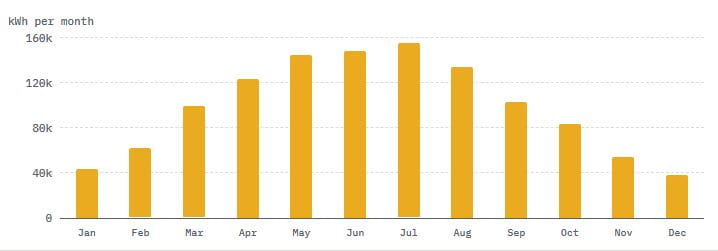
Design estimate from the as-built PVsyst energy model, in kilowatt-hours. Summer is about four times December because the days are longer and the sun is higher. Actual output varies with weather.
Project Brief:
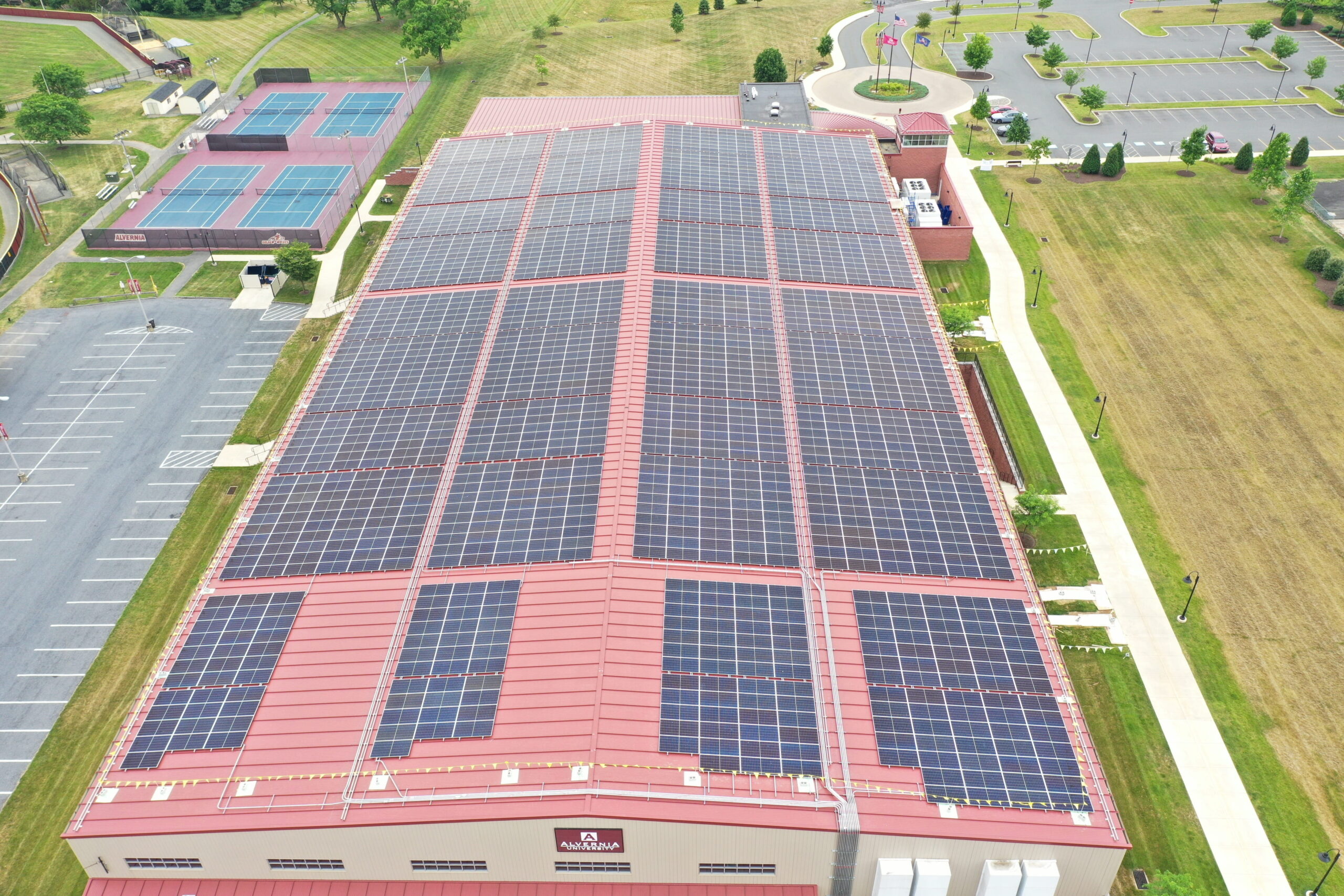
1,683 solar panels on the roof of the Plex now turn sunlight into electricity for the building, cutting the power Alvernia buys from the grid.
How it works
- Panels make DC power
Sunlight hitting the silicon cells in each panel produces direct current. The panels sit at a low 10° tilt on the PLEX roof. - Inverters convert it
Twelve inverters change that DC power into the 480-volt AC power the building uses. - The PLEX uses it first
Power flows into the PLEX’s main electrical service, so the building draws less from the utility. - Extra goes to the grid
When the array makes more than the building needs, the surplus flows onto the Met-Ed grid through a new 750 kVA utility transformer. - It is watched around the clock
A monitoring system tracks output every day, and Alvernia plans a lobby display showing real-time energy results.
WHO BUILT IT:
- Alvernia University – Owner, Facility Planning & Construction
- RER Energy Group – Design-build developer, Reading, PA
PROJECT SPECIFICATIONS:
- Size: 992.97 kW DC / 720 kW AC
- Panels: 1,683 × Seraphim 590 W
- Inverters: 12 × CPS 60 kW string inverters
- Safety: 891 rapid-shutdown devices de-energize the roof wiring in an emergency
- Utility: Met-Ed (FirstEnergy), approved to operate Oct. 5, 2026
- Monitoring: AlsoEnergy